Islands of Conviviality
September 1–9, 2026
Split, Brač, Hvar, Vis
an island pedagogy across the southern Dalmatian archipelago marking the centenary of Ivan Illich’s birth
With Hito Steyerl, Jürgen Renn, Claire Pentecost, Sarah Lewison, Sara Black, Yvonne Illich, Srećko Horvat, !Mediengruppe Bitnik, Damir Ugljen, Armina Pilav, Jamie Allen, Valeria Graziano, Gordan Savičić, Felix Stalder, Morana Miljanović, Manja Ristić, Saša Savanović, Kevin Kenjar, Laura Lotti, Predrag Kolaković, Dora Vanette, Ivica Mitrović, Bronwyn Lay, Dora Vanette, Aleksandra Sekulić, Dennis Schep, Luís Brum, Mariana Pestana, Helin Ulas, Marianna Tsionki, Cassie Thornton, John W. Kim, the Anthropocene Commons network, Brian Holmes and probably a few others
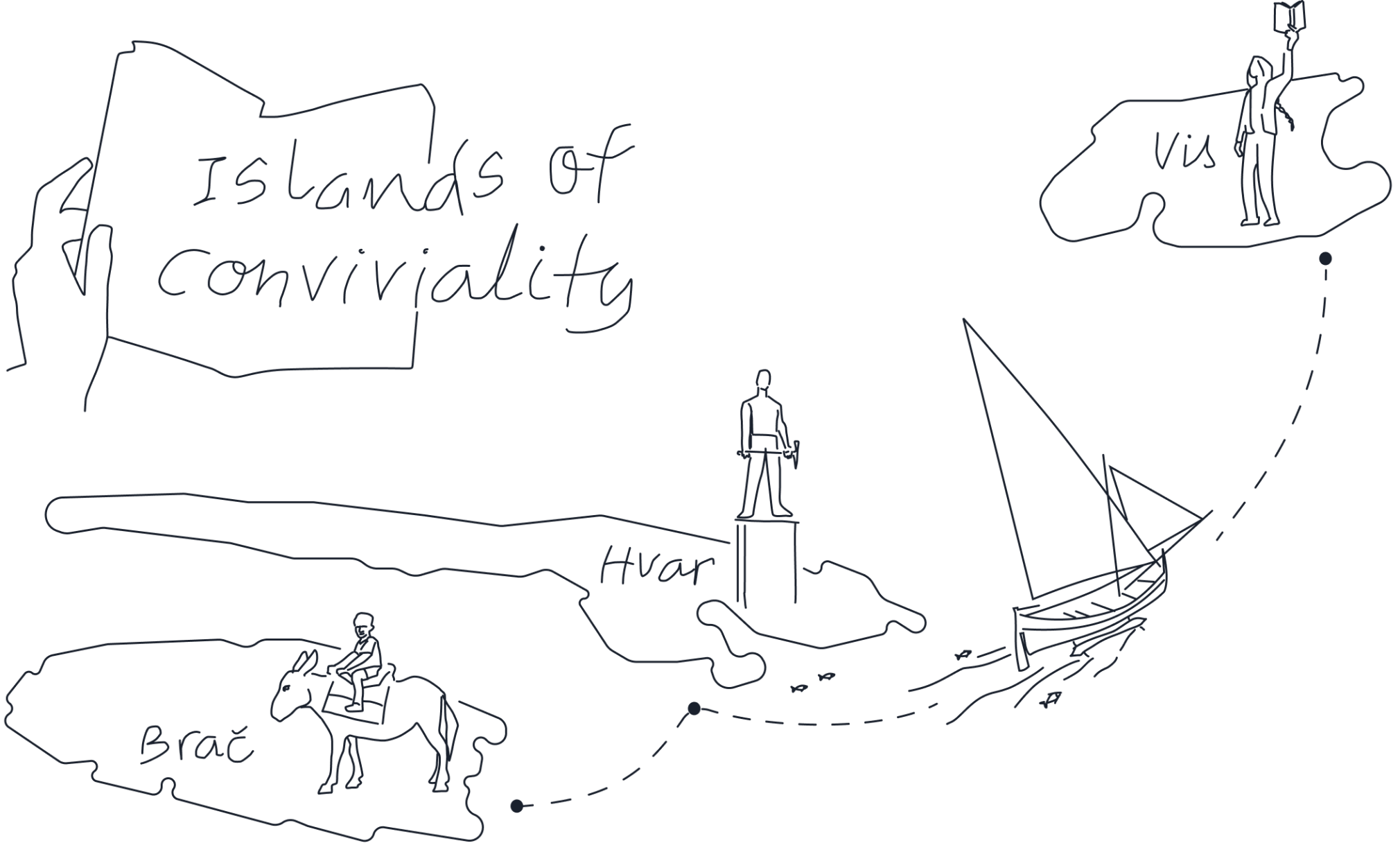
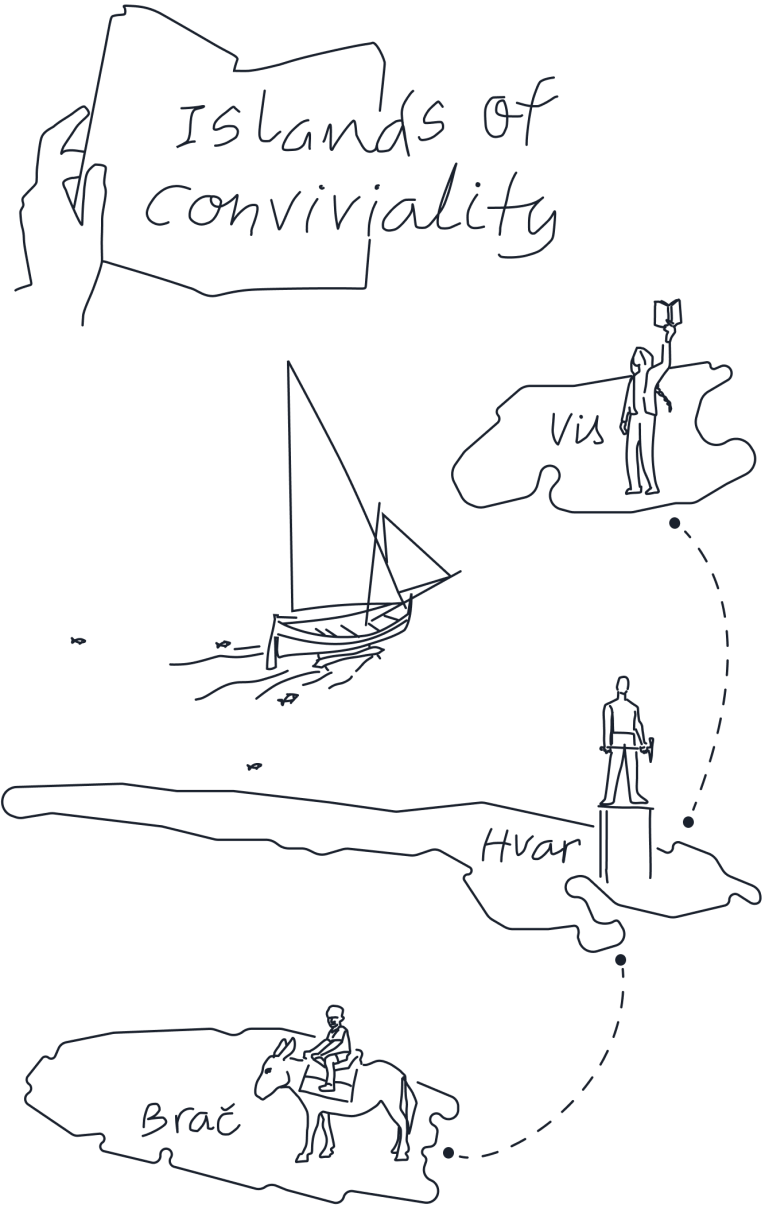
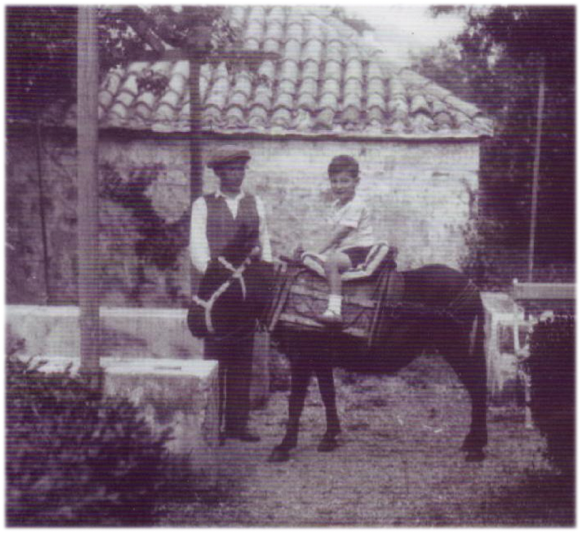
A photo of a young Ivan on a donkey on the island Brač; the Ilich (Ilić) name is one of the island’s oldest, its windmills and a 16th-century complex of houses can still be found on the island
Islands as a way of life, as a way of learning.
In early autumn 2026, a small research procession departs from Split, the ancient Roman coastal city, and crosses the seas between Brač, Hvar, and Vis: three islands that each, in their own way, host ways of living away from the mainland. We eventually arrive on Vis, an insular territory with a deep history of refuge and autonomous actions.
We travel together also to explore the legacy of Ivan Illich (born September 4th 1926), a Croatian-Austrian thinker who, through his best-known writings—Medical Nemesis, Deschooling Society, Tools for Conviviality—posed generative challenges to the industrial-modern institutions that still presume themselves to be ‘indispensable.’ Illich insisted on environmental health, offered a vocabulary for institutional alterity, and emphasised the importance of technology as convivial tools rather than as deterministic fate. Illich’s concept of “conviviality” denotes tools and institutions that serve people, not the other way around, thus strengthening their autonomy, mutuality, and ability to cooperate freely.
In the year of his 100th birthday, we gather in and between places that shaped his life and thinking, as only “one month after his birth he was put on a train, and then on a ship and brought to the Island of Brač.”
Now, amid collapsing international orders, infrastructures of “openness,” technopolitical fascism penetrating all spheres of life, and a climate that is changing everything—many of Illich’s questions land with new urgencies. Islands of Conviviality treats these not as the inheritance or heroism of one thinker but as situated invitations to think and act with hosts, guests, visitors, local humans and nonhumans, landscapes, ecologies, others. Each island carries Illichian threads:
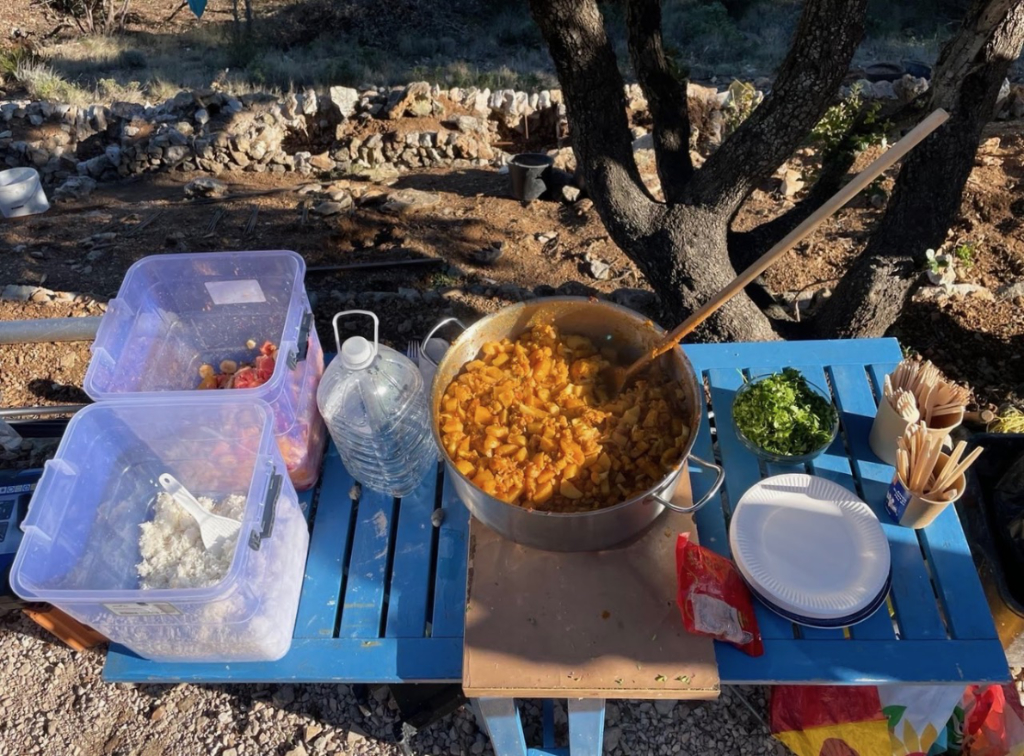
Brač — Plenty and Remedy. Around the agroecological project Divja Herbal Crafts OPG of Armina Pilav, her family and other Earth companions, and the centenary day of 4 September (Illich’s birthday): land practices, herbal knowledge, foraging, fermentation, embodied non-institutional care, sharing food, and silence as a commons. Medical Nemesis unfolds as a walking itinerary from Bobovišća N.M. led by Damir Ugljen and Andrea Kegalj then in Divja kitchen and garden, with sensorial communing process ‘Hands in Food’, eaten from a shared table prepared by Armina Pilav. ‘Hands in Food’ will lead us to the next occasions of conviviality, a collective listening of sound performance in park Vrilo in Bobovišća N.M Bay produced and shared with the public by sound artist and musician Manja Ristić.
Hvar — Heritage and Holiday. The Adriatic as an archive of experimentation in decommodified pleasure: what do people come to islands to find? What does visitation, also as tourism, amplify and erase? Who gets to rest and play together? Decommodified pleasure excursion through the streets of Stari Grad and a workshop where we ask “what does a summer cost?”
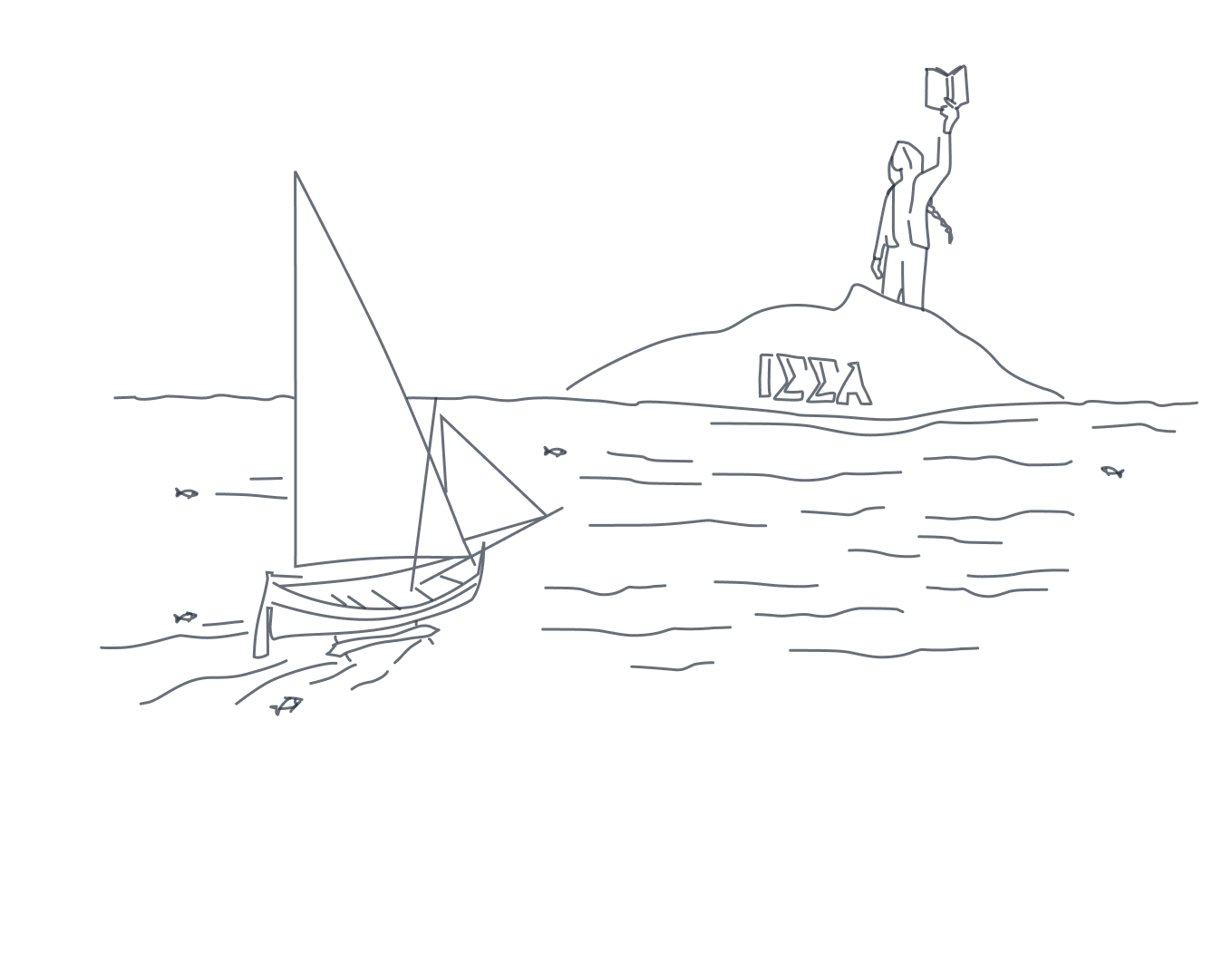
Vis — Tools and Autonomy. At ISSA on the hill above Komiža: Solar conviviality as energy, water, communications, solar-powered web hosting. Sharing tools for an intermittent internet, a diurnal digitality. What infrastructures of autonomy might look like against a world of enshittified platforms, mega data centers and proprietary clouds.
The sea is itself part of the program hosting the Sea Symposium, a set of slow, processual research crossings in which each boat becomes a site of situated, contextual unlearning and learning by co-doing, of specific crew conviviality, of re-schooling in new frameworks of reading and responding, and of learning a conviviality in a temporality different from that of land. We are sailing and co-learning with Nautilus Adriaticus, Quelili and Ermenautica and their captains Morana Miljanović, Dennis Schep and Matteo Aria.
Taking Part
The Islands of Conviviality programme runs at four scales:
Public — everyone welcome, no registration needed.
Public, limited participation — open to all, but with limited seats. You will need to register, and sign-up details will appear here in the coming weeks.
For participants and volunteers — the on-water days between islands and the Sea Symposium sessions on board. The boats hold only so many people, and the project’s slow, research-processional spirit asks us to keep things gentle and unhurried.
By invitation — closed to the public. Small, in-the-room working sessions for specific invited and collaborating communities.
We continue to seek partnerships, support, boats, and connectivity that might further enhance the journey, its topics, and its reach. If you’d like to help, in any form at all, please simply reach out.
Program
Tuesday
1 Sep
Split, PROSTOR
Launches – On knowledge in the Anthropocene, and on living and learning from impaired waterscapes — with Jürgen Renn, John W. Kim, Ivica Mitrović, Armina Pilav, and Jamie Allen, at PROSTOR (Culture Hub Croatia), in partnership with UMAS Arts Academy, University of Split and the Anthropocene Commons network.
Public, In English with Croatian translation
Wednesday
2 Sep
Split – Bobovišća na moru, Brač
Boat onboarding and sail from Split to Bobovišća na moru, on the island of Brač, opening the on-water Sea Symposium strand with Quilleli and Ermenautica.
For participants and volunteers
Bobovišća na moru/ Ložišća
Walk from Bobovišća na moru to Ložišća wiith Andrea Kegalj and Hands in Food evening at OPG Divja with Armina Pilav: land practices, herbal knowledge, foraging, fermentation, and sharing table and stories around food ecosystem of the Brač island.
For participants and volunteers
Thursday
3 Sep
Bobovišća na moru, Vičja vala
Sound performance by Manja Ristić.
Public
Sailing by the Illich mill, with inputs and discussion from Yvonne Illich, Ivan Illich’s niece.
Bobovišća na moru – Blaca, Brač
Sailing from Bobovišća na moru to Blaca, Nautilus Adriaticus joins the on-water Sea Symposium.
Public, limited participation
Friday
4 Sep
Blaca – Stari Grad, Hvar
Sailing from Blaca do Stari Grad on the island of Hvar
For participants and volunteers
Stari Grad, Hvar
A guided walk through Stari Grad with Valeria Graziano and Kevin Kenjar Rad Holidays: The Adriatic as a Pleasure Commons, stopping at familiar sights to hear unfamiliar stories from across the Adriatic, in which people challenged commodified tourism and claimed the sea as a shared space for collective leisure and life.
Public, limited participation
Port of Stari Grad, Hvar
Arka Kinari arrives in Stari Grad — the seventy-ton sailing ship and floating cultural platform joins the Islands of Conviviality constellation in Hvar, bringing its ongoing voyage around climate resilience, maritime culture, and life at sea into conversation with the programme.
Public
Saturday
5 Sep
Stari Grad
Workshop What Does a Summer Cost? – an alternative imagination for island tourism for people aged 18 – 25 who live, work or study on Hvar, co-led by Valeria Graziano and Morana Miljanović.
By invitation, closed to the public
Guided visits aboard Arka Kinari. Together with the crew, visitors explore how the ship travels with the wind, produces electricity from the sun, desalinates water, manages food and waste, and sustains collective life within the limits of a small floating world. What might these practical systems teach us about ecological autonomy and life on “Spaceship Earth”?
Public, limited participation, up to 15 people per visit
Stari Grad – Pakleni otoci, Hvar
Sailing from Stari Grad to Pakleni otoci
For participants and volunteers
Sunday
6 Sep
Pakleni otoci – Vis
Sailing from Pakleni otoci to Vis
For participants and volunteers
Monday
7 Sep
ISSA, Vis
Working action – building, maintaining, cooking, learning together.
Public
Tools for Autonomy workshop with !Mediengruppe Bitnik, Gordan Savičić and Felix Stalder on ISSA’s Internet web server powered by solar energy which is only ‘on’ when there is sufficient sunlight to power it. How could these independent servers be networked so one machine takes over from the others to ensure that the network is always ‘on’ even if the single computer is not?
Public, limited participation
Keynote by Hito Steyerl, Another Battle for Kordun, generative AI, flexible realism and the Pantheon data centre in Topusko
Public, In English
Tuesday
8 Sep
Komiža, Vis
Restitution session: what was learned, what is returned
For participants and volunteers
Komiža 2050 – communal dinner and discussion on insular cuisine and food sovereignty with Naan-aligned cooking and ISSA, in cooperation with Komiža Tourist Board
Public, In Croatian
Wednesday
9 Sep
Goodbyes
co-organizer – Max Planck Institute

With love — ISSA, and all the other islanders…
We are grateful to Convivial Stiftung and to the ERSTE Foundation for the support that has made this programme possible, and to co-organizer, the Max Planck Institute of Geoanthropology for enabling the Anthropocene Commons launch event in Split. Islands of Conviviality spoke to many friends through Forest University, hosts of an Ivan Illich reading group in the Spring of 2025. We work in partnership with the Island School of Social Autonomy (ISSA), Vis · OPG Divja, Brač · Pharos Institute, Hvar · UMAS Arts Academy, University of Split, Nautilus Adriaticus, Bildung und Solidarität e.V. operating Quelili sailboat for intercontinental solidarity · Ermenautica · ARKA KINARI · Culture Hub Croatia / PROSTOR, Split · the Anthropocene Commons network · metaLAB (at) Harvard, Berlin & Basel · Komiža Tourist Board · Mississippi River Open School for Kinship and Social Exchange. We are excited to work with L’Internationale / Museum of the Commons and Museum of Contemporary Art, Zagreb published writings and media expositions of the project.
Essay
Islands of Conviviality
An Illich Itinerary
Islands of Conviviality is collaborative research and practice on social autonomy, relationality, and interdependence through a travelling constellation of gatherings, itineraries, and interventions. Inspired by the reflections of Ivan Illich… read more