An Illich Itinerary
By Laura Lotti, Kevin Kenjar, Jamie Allen
Islands of Conviviality is collaborative research and practice on social autonomy, relationality, and interdependence through a travelling constellation of gatherings, itineraries, and interventions. Inspired by the reflections of Ivan Illich, whose thinking on conviviality was shaped by his childhood on the Dalmatian island of Brač, we return to this landscape to think about how island spaces, both literal and conceptual, have offered and now offer alternative ways of thinking and living together. We trace and are inspired by a long trajectory, across the deep time of the Dalmatian islands, through their history of piracy and rebellion, to Illich’s visits to Brač as a youth, to our own activities today. Island-like 1960s and 70s “spaceship earth” thinking of limits and networks also inform the itinerary, as do oases and other archipelagic inversions, concepts and practices. Over collective research and practice with friends new and old over more than two years, island gatherings, collective meals, reading circles have explored and practised ideas that illich also touched upon, for the present moment. From September 2026 and beyond, researchers, artists, practitioners, and island communities join us in testing these ideas through shared work—mapping networks of autonomy, treating the sea itself as a programming site that connects as much as it separates these islands of conviviality.
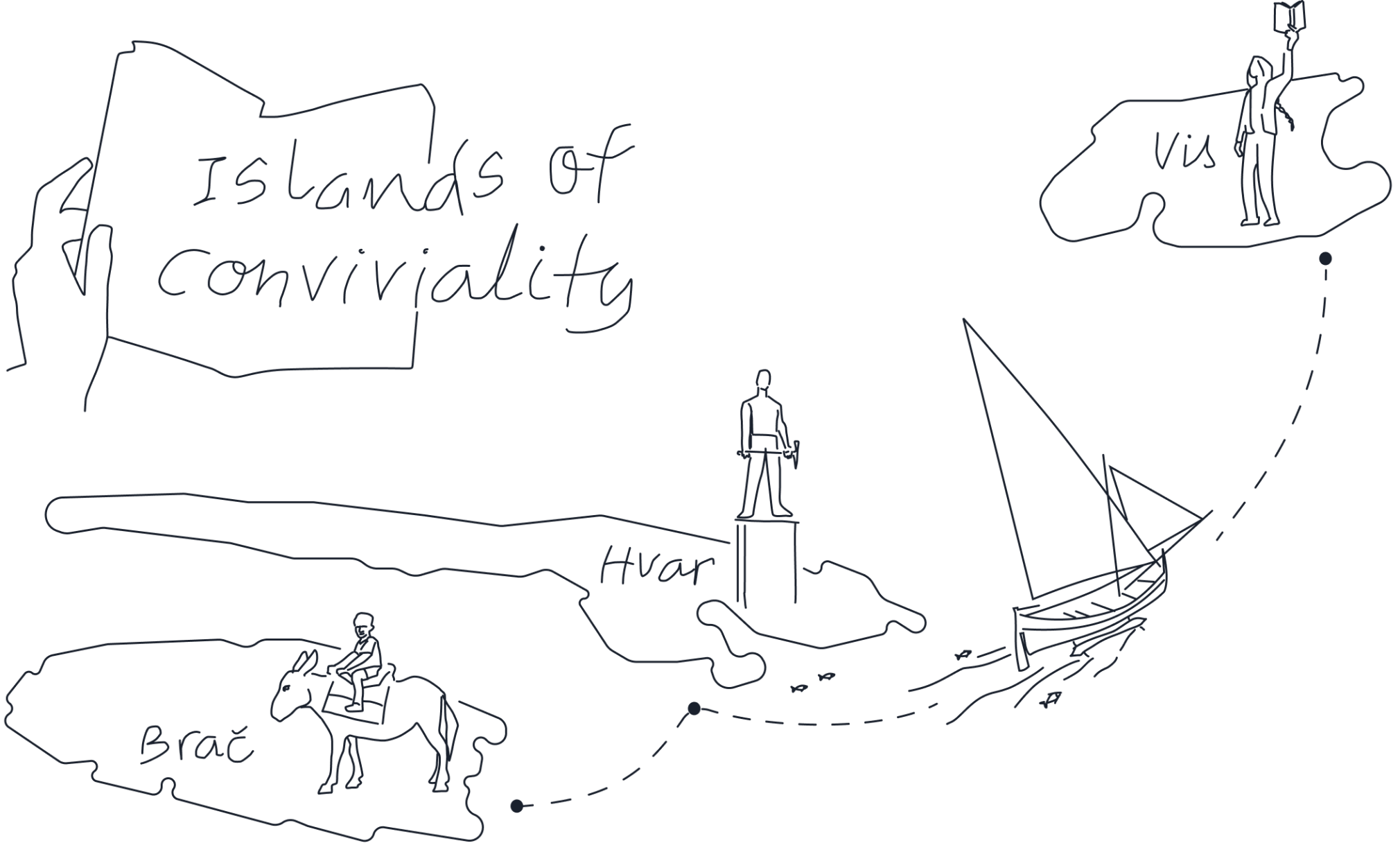
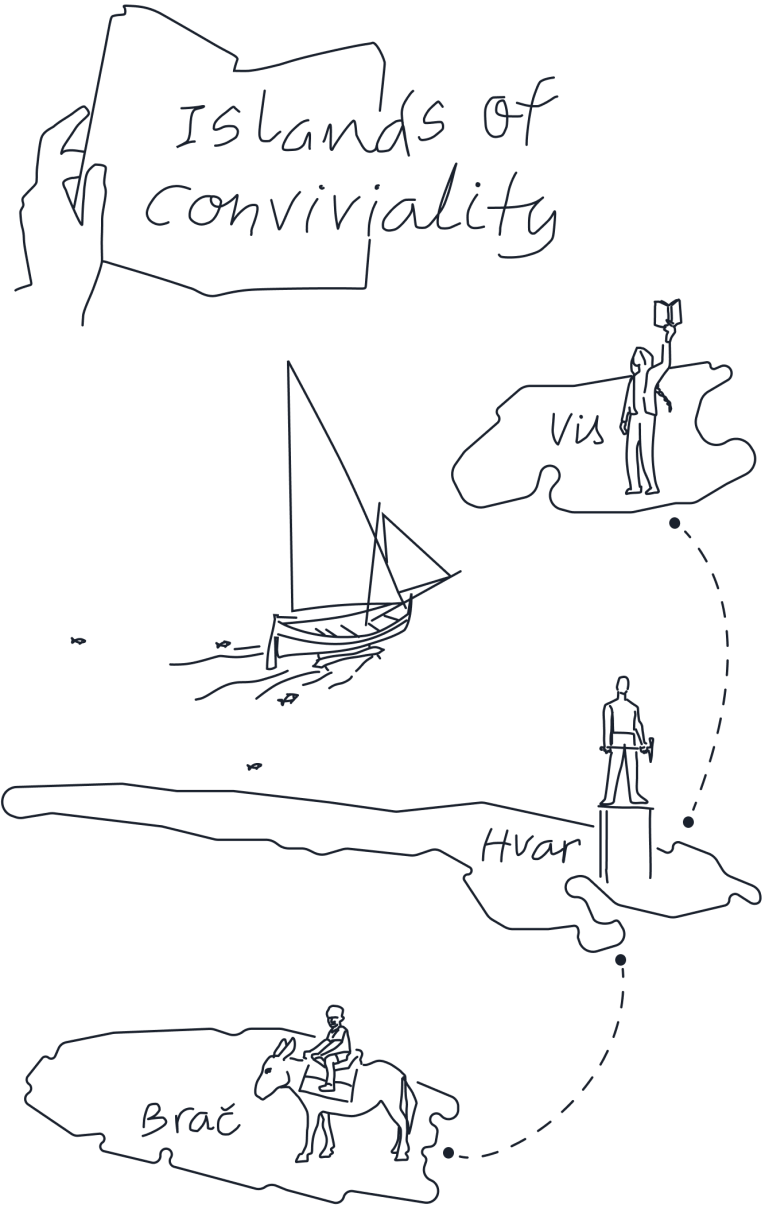
Conviviality, for Illich, was a precise term, not just a synonym for good company. He set it against industrial productivity: in Tools for Conviviality (1973) he used the word for “autonomous and creative intercourse among persons, and the intercourse of persons with their environment.” It describes a condition possible only where tools, technologies, and institutions stay small enough to be understood, shaped, and repaired by the people who use them, and limited enough to enlarge autonomy rather than manufacture dependence. Conviviality, in his phrase, is “individual freedom realised in personal interdependence” (1973). We take this up in two registers: as a lens, for noticing where the tools and systems around us have passed the threshold at which they stop serving us and begin to discipline us; and as a practice of shared meals, rebuilt drystone walls, DIY radios, reading circles, and slow crossings by boat. Autonomy is something made in common, within the kinds of limits that islands set.
17,000 Years Ago: Sea Changes
People were in this area before these islands were. With a low-standing sea the areas around Brač, Hvar and Vis were joined to the mainland, and humans lived in caves here through the long cold of the ice age. In Vela Spila, on Korčula, they found small fired-clay ceramic art figurines made by human hands, seventeen thousand years ago (Farr, Miracle et al. 2012). Off what is now the island of Korčula there is a stone causeway that Neolithic islanders built seven thousand years ago that is now several metres underwater. Around 390 BCE settlers from Syracuse founded a colony on Vis, and called it Issa. It was the first Greek city on the eastern Adriatic and had its own coins and eventually had colonies of its own. The Island School of Social Autonomy now bears the same name.
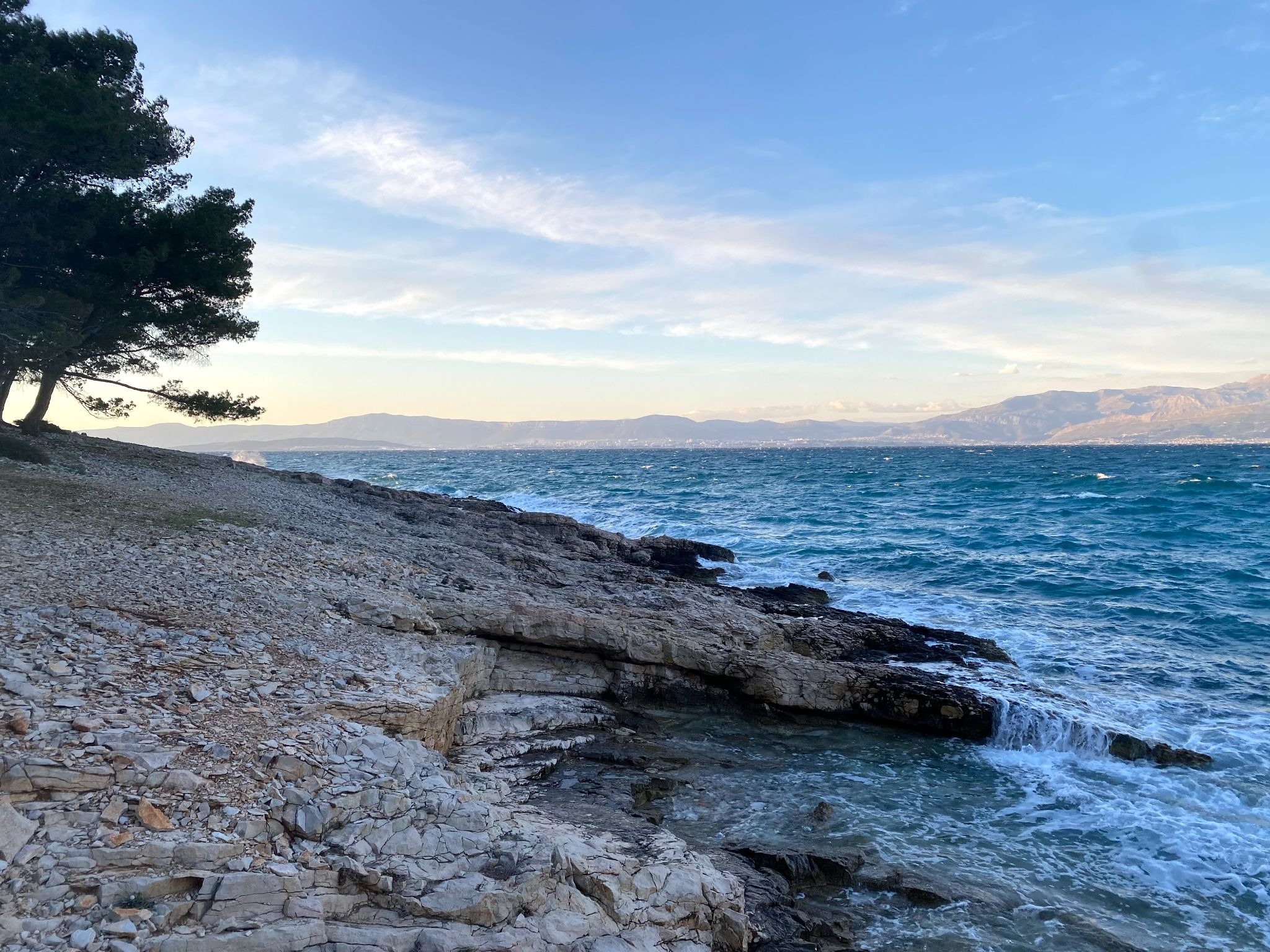
The white stone of the Dalmatian islands is the floor of a vanished sea. The African and Eurasian plates closed the ocean basin between them and crumpled its floor into long ridges running parallel to the shore: the Dinaride Mountains. At the end of the last ice age, seas rose more than a hundred metres, drowning the valleys between the karst mountain-islands that we now call Brač, Hvar and Vis. Sea-level rise has already happened here, a couple of times. Karst stone is soluble, permeable, and leaky. Rain sinks into the limestone, through sinkholes and caves, leaving a dry surface. Fresh water has to be caught on the way down: rain off a roof into a cistern, the gustirna, a vessel of fixed size that holds exactly what the sky overhead gives. It is a landscape that anticipates Illich’s argument in H₂O and the Waters of Forgetfulness (1985): that modernity dissolved the world’s many particular waters into a single abstract fluid, stripped of place and memory.

1510: A Rebellion
The Dalmatian islands have many secluded coves and inlets, making them a haven for experiments in self-determination, autonomy, and piracy since antiquity. Whereas most South Slavs in the region had adopted Christianity by the 8th century, the inhabitants of the islands of Brač, Hvar, and Vis clung to their Slavic paganism well into the 10th. The region, then known as Pagania, became the center of a booming Venetian slave trade—Christians were proscribed from enslaving fellow Christians, so a nearby outpost of paganism proved to be the primary economic driver for the rapid growth and development of Venice. Slavic pagan inhabitants were sold throughout the slave markets of Spain, North Africa, and the Middle East, with the very word “slave” serving as a testament to the Slavic background of the victims of the Adriatic slave trade. Local inhabitants were eventually converted to Christianity, but Adriatic slave trading continued, exploiting loopholes whereby the Bosnian Church and Patarenes were deemed heretics, suitable for enslavement as “not real Christians.” This continued until the Ottoman conquest cut off supplies of Balkan slaves, forcing European powers to divert their efforts towards the African slave trade. Throughout the 16th and 17th century, backed by Venice’s Ottoman and Austrian imperial rivals, the coastal towns of these islands were subjected to frequent raids by corsairs. There are coastal fortifications and distinctive fortified churches and monasteries all over Dalmatia which speak to this legacy.
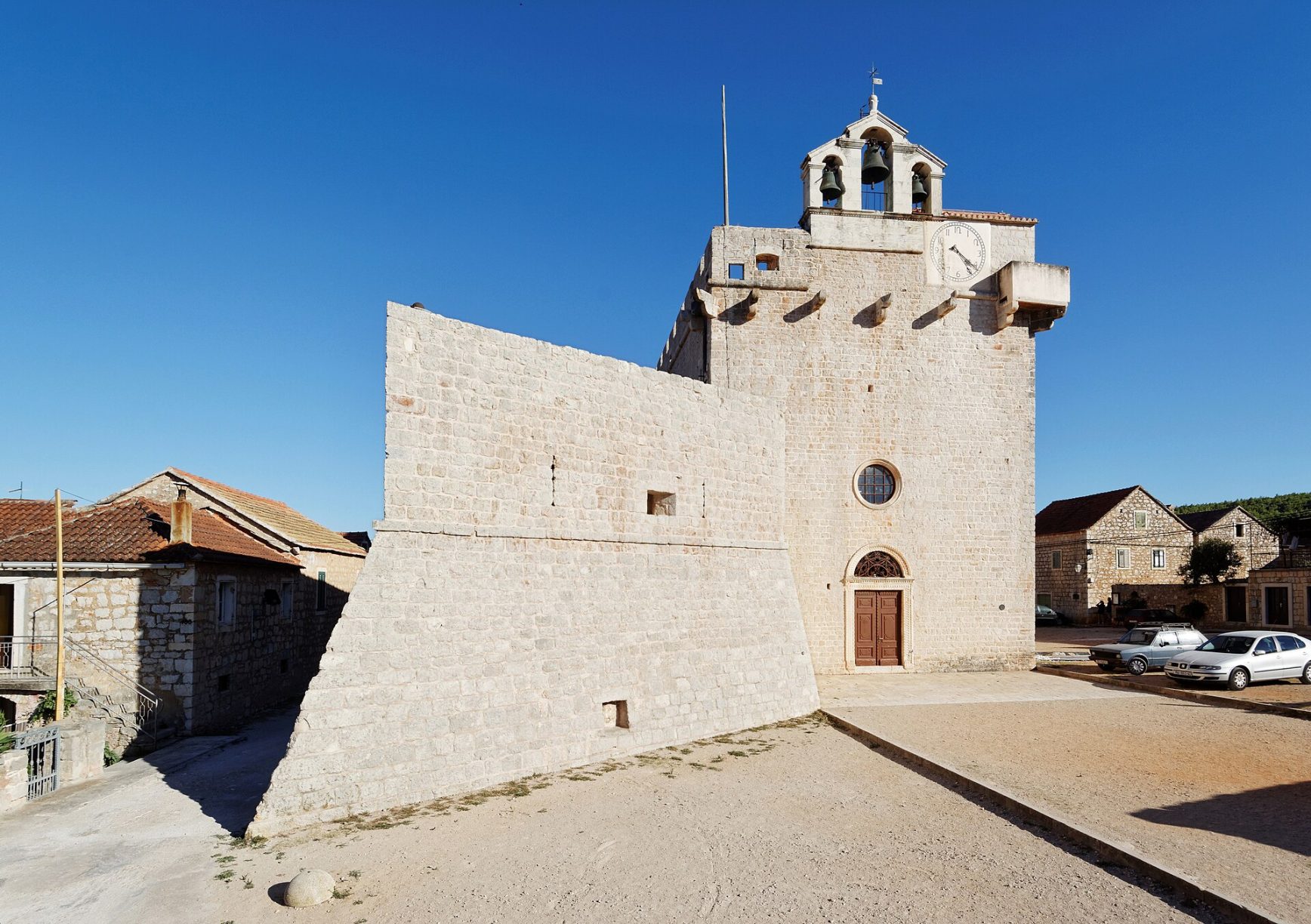
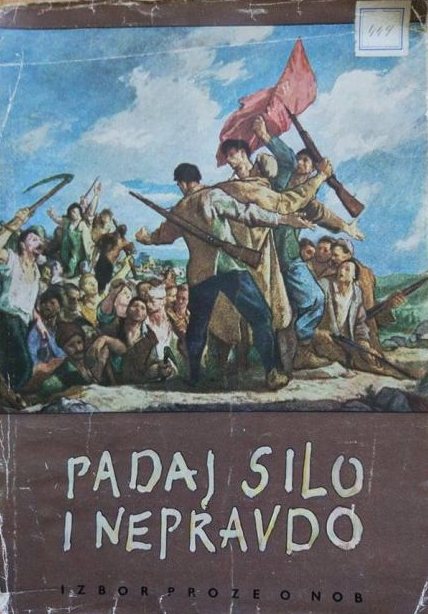
By the 15th century, the islands were incorporated into Venice’s “Domains of the Sea” (Stato da Màr), power over the islands was in the hands of the hereditary merchant oligarchy in Venice. The local nobility enforced this dominion, ruling over the islanders through force and intimidation. The nobles’ force and injustice reached a tipping point in 1510, leading to the people of Hvar to seize power on the island. Led by Matija Ivanić, the islanders arrested the nobles, and a flotilla of local sailors and fishermen encircled the island. The success of this “Hvar Rebellion,” and the example it set that autonomous management was possible without oppressive institutions, was deemed a threat to Venetian rule. Venice attempted to suppress the rebellion, and the rebellion was ultimately crushed in 1514 after years of armed struggle. A 1908 poem memorializing the rebellion, known by its opening line, “Padaj silo i nepravdo” (“Fall, oh force and injustice”) was put to music and became an inspirational march for anti-fascist partisans during World War II.
1926: A Passing Silence
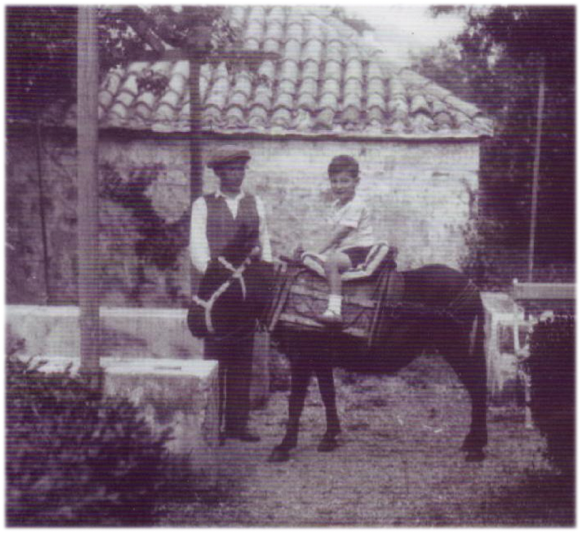
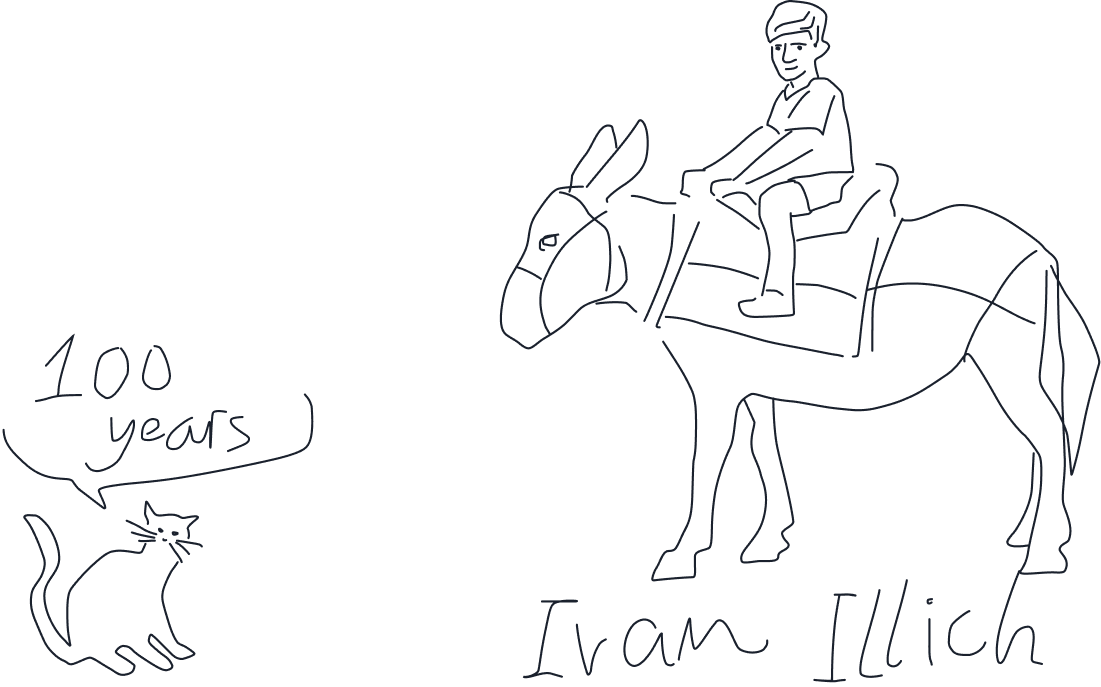
In the autumn of 1926, a one-month-old Ivan Illich travelled from Vienna, where he was born, to Brač, where his family hailed from, to meet his grandfather. He would go on to become the philosopher, priest, and social critic known for his wide-ranging interests and sharp critique of capitalist institutions (from schools to medicine to transportation, among others). On the same boat on which he arrived, he recounted 55 years later in his essay Silence is a Commons, the first loudspeaker landed on the island, drastically changing the surrounding social and political ecology: “Up to that day, all men and women had spoken with more or less equally powerful voices. Henceforth this would change. Henceforth the access to the microphone would determine whose voice shall be magnified” (Illich 1982). That seemingly unremarkable technology did to communication what enclosure had done to land: turn a commons for everybody’s wellbeing – silence and its converse, speech – into a resource to be extracted and profited on.
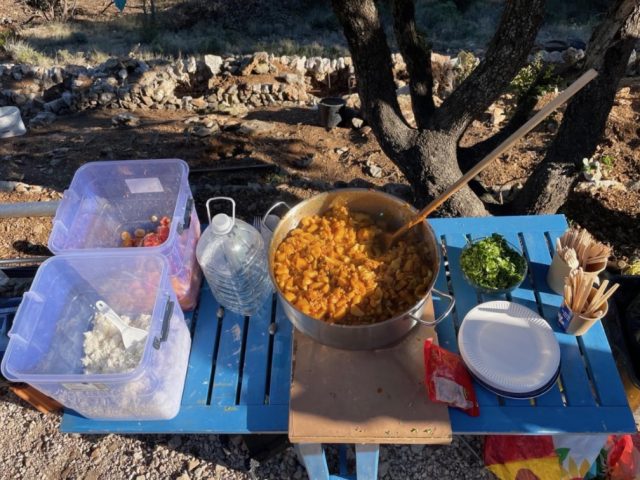
We imagine Illich’s visits on the island of Brač informing his thinking on convivial relations as a kind of joyful austerity, austere luxury or compassionate containment (with thanks to Cassie Thornton). Limits and a certain kind of restraint as a means to abundance—the meal is as big as the pot we have to cook with (with thanks to the cooks at the Art Meets Radical Openness festival). Islands have long inspired (re)thinkings of scarcity and abundance, spaces for more conscious articulations and relationships between resources, community, technology and desire. Thomas More’s Utopia (1516) was a fictional island, a response to the enclosure of common land in England in the 16th century and the widespread poverty that ensued for those excluded from private property. More’s Utopia depicted a socio-political system centred on common property and the virtues of a moderate life. Anticipating Illich, More believed that only by creating new institutions was it possible to rethink scarcity “as a form of sufficiency, made possible by a radical change in the culture of desires” – as observed by Jonsson and Wennerlind in their historical inquiry into the concept of scarcity (2023, 45) – against the imperative of unlimited profit-making and ever-expanding growth.
1942: The Crossing Out
Sixteen years after the boat brought the infant Illich and the island’s first loudspeaker to Brač, the same coast carried the family the other way.
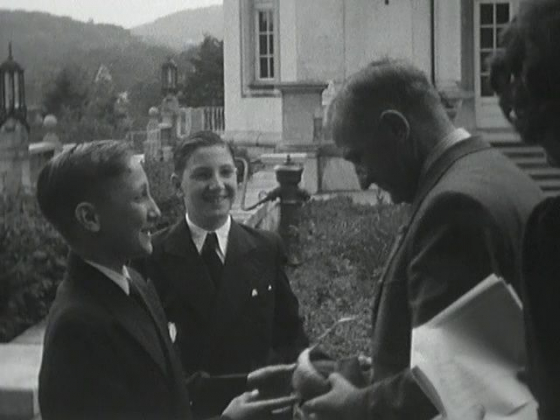
Ivan and his younger twins, Micha and Sascha were Mischlinge, of mixed blood. Their mother Ellen, known as “Maexie” came from a Jewish family that had taken Christian baptism. Their father, not Jewish, allowed the family to hold their family villa, under the fragile rank of a “privileged mixed marriage,” until the death of Maexie’s father, the industrialist Friedrich Regenstreif in 1941. Friedrich had built the Vienna villa the family lived in since 1932, but under shifting racial laws the family was forced to sell it to the German Labour Front. The family was allowed one truckload of belongings before handing over a basket with the villa keys to the official with the party badge on his collar—all of which the dedicated amateur film-maker Maexie filmed, as if to restore dignity to the occasion.
Through their father, the Illich boys and their mother had Yugoslav papers, and when Italy annexed Split and the Dalmatian coast in 1941, these papers turned Italian. It was an accident of empire that opened a way out. In September 1942, Maexie took the three boys down to the coast, to Split, where they stayed three months before crossing to Florence.
So the family that always insisted it was Dalmatian—”we are not Italians,” Illich liked to say, “but Venetians”—was carried to relative and time-sensitive safety in Italy (Only a year later, Germany occupied Italy and further deportations began.).
Ivan Illich seems to have carried this period in his heart and mind, for the rest of his life. “Since I left the old house on the island in Dalmatia,” he told David Cayley late in life, “I have never had a place I could call my home. I have always lived in a tent.” The missionary impulse instilled, he refused, his whole life, to make himself a victim.
1970: An Ecology of Limits
Islands were instrumental in catalysing the emergent discipline of ecology in the 1960s and 1970s, providing an image of the “isolate” for both scientific and countercultural movements, for better and worse (DeLoughrey 2013). From the Odum brothers’ study of energy flows in the atolls of the Marshall Islands to MacArthur and Wilson’s Theory of Island Biogeography (1967), islands were model systems: observable, finite, and governed by autonomous, self-reinforcing feedback loops.
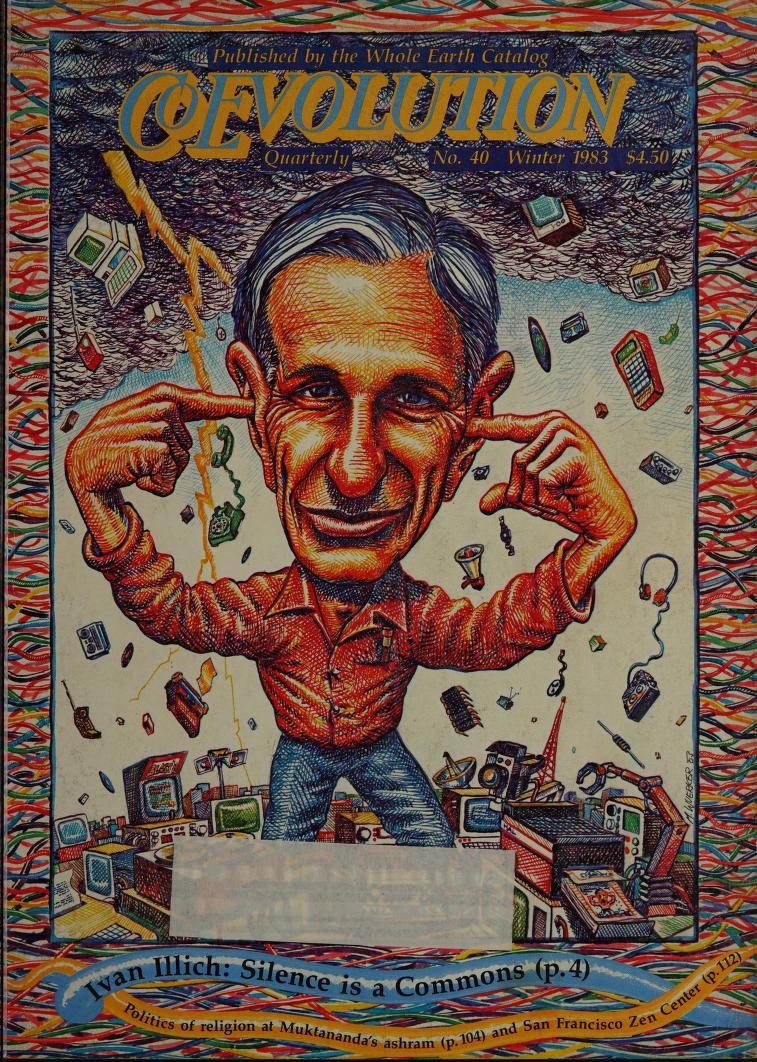
The Earth itself started to be seen as an island of life in a vast universe, prompting a interests and urgency in living with constraints, and in fear of a “population bomb” (Ehrlich 1968) Buckminster Fuller’s “Spaceship Earth” (1968) can be seen as an example of island-thinking in practice, casting the planet as a closed vessel with finite resources, requiring careful stewardship. This same period’s back-to-the-land movement, heralded by conviviality-minded publications like Stuart Brand’s Whole Earth Catalog (1968–1972) and CoEvolution Quarterly (1974–1985), deployed island-thinking in the wild, demanding “access to tools” for self-sufficiency within ecological limits.
By 1960, Illich was living in Cuernavaca, Mexico, where he had founded CIDOC (Centro Intercultural de Documentación). The CIDOC functioned as a kind of island, too—it autonomised itself from European and North American academic and theological institutions, self-funded through Spanish and English language courses. CIDOC’s boundaries remained porous to exchange and alternative forms of knowledge production, its goal? A “convivial society.” Rather, it was about creating spaces where communities could maintain autonomy while still engaging with larger systems without becoming dependent on them.
The island thinking of the 60s and 70s enabled forms of ecological awareness, concepts and activities that acknowledge finitude, feedback, and carrying capacity. Illich’s conviviality aligned with these a potential alternative to technocratic systems management, making the tensions that systems often introduce visible rather than subsuming them with further systems. In all these approaches, working within finitude is a condition of possibility, opening the way for forms of autonomy that operate through existing conditions rather than seeking escape from them.
2015: Tools for Convivial Networks & Media
Illich meant tools very broadly — a bicycle, a library, a telephone, a lathe — anything through which we act on the world. Of all the places his convivial tools took root, though, one of the least expected was the computer.
Some of us came upon Illich at the electronics bench: through “physical computing” workshops and “creative coding,” through the IDEs and compilers and the first cheap microcontrollers you could program at a kitchen table. In the years around 2010 there was a moment, which for a while it even felt like a movement, when artists, designers, teachers, and engineers gathered in hacklabs, fab labs, and maker fairs, in the orbit of open projects like Processing.org and Arduino.cc, convinced that the tools of the digital world could be opened up: understood, repaired, and remade by the people who used them, instead of sealed inside the black boxes of the firms that sold them.
But what was at stake was never only sharing of free licences and posted repositories. Program and building systems by hand puts us on one side of a it: instructing machines rather than only consuming what they serve you. A convivial computer, in that spirit, is one whose lid you can lift—legible, modifiable, kept to a human scale—and not an appliance that quietly disciplines you into its defaults. This is computing as a kind of literacy and authorship rather than consumption, and it maps almost exactly onto Illich’s distinction between a tool that enlarges autonomy and one that manufactures dependence. We thought about in this period about “tools for conviviality,” though not everyone who thought about it knew they were quoting a Catholic priest who had died in 2002, after largely falling out of fashion in technology circles (for some good reasons, some not so good).
In 1974, in Berkeley, Lee Felsenstein, who helped build hobbyist computing machines, drew up a design he called “a convivial cybernetic device,” having been handed Tools for Conviviality by his father. A tool, he reasoned, should be simple enough that its user could understand and repair it, open and replace parts in, like an old crystal radio. The conviction that you ought to be able to take the lid off your own machine ran from there, and black boxes were demanded to be opened all over the place. The digital world we now live in seems so much heavier. We know about and create loads of data centres, undersea cables, the mines and the e-waste. We all seem to have some awareness that the screen isn’t weightless, and people—for good reason of rather frequent breakdowns—seem to think about infrastructure, maintenance, bottlenecks, repair more than we used to. Thes were Illich’s questions, too. He argued that tools and technologies, systems and techniques, past a certain scale, stops serving its users and starts disciplining, limiting or impeding them. Things get too heavy and hit what he called a “watershed.” The car winds up defeating walking; an institution built to heal people starts to disable them; food is so systematised and efficient, it ceases to be sustenance; we are so connected, we wind up alone.
Convivial dreams of the digital, have been, for the most part, enclosed. We have witnessed the financialisation of open source, as it folded back into the platform capitalism it had briefly tried to escape. The peer-to-peer infrastructures that promised collective ownership curdled often into speculation, and then weirdly into a perverse crypto-nightmare for a while there (maybe still?). “Maker” became a brand, and then a bankruptcy. The liberating tools we had been promised kept coming back as their opposite: As surveillance, as dependency, as the slow code rot and system glut Cory Doctorow would later helpfully name as “enshittification” (2022).
By the time we reached the islands, it was no longer obvious that conviviality could be coded into or by these platforms at all. This productive disappointment is something carried there, and onto the rather unchanged marine technology of boats, moveable islands, in the Adriatic. We shall not reject tools, but we shall try and be suspicious of autonomies sought by the wrong means, or in ways that feel autonomous but turn out to short circuit, render cynical or impossible these attempts. We might need with us a few older, slower tools, that enable things like shared meals and help building a dry-stone wall, alongside loving friendships mediated at the speed-of-light from the other side of the world.

2024: To Live Together
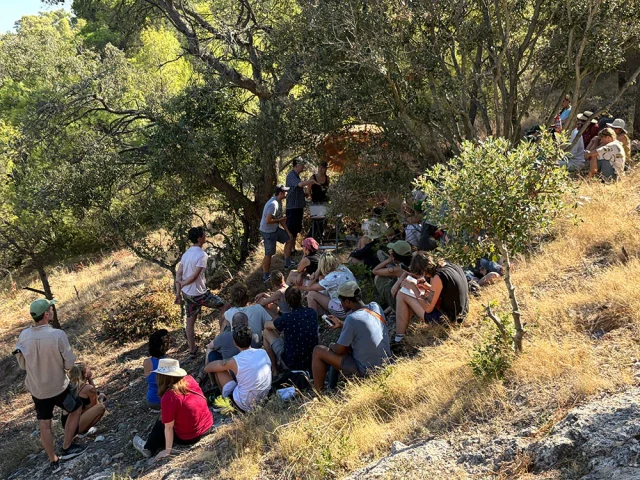
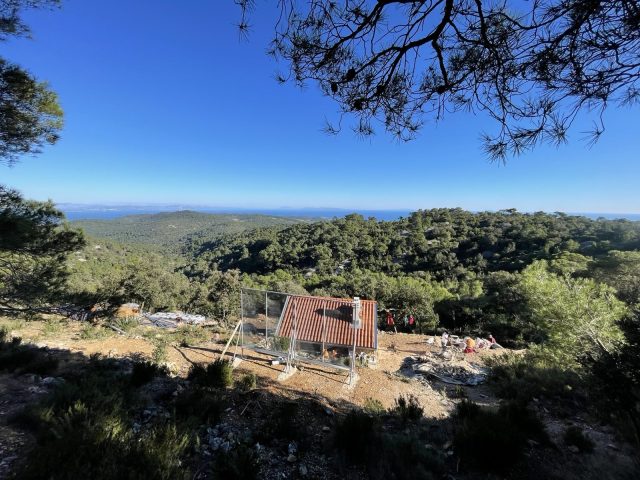
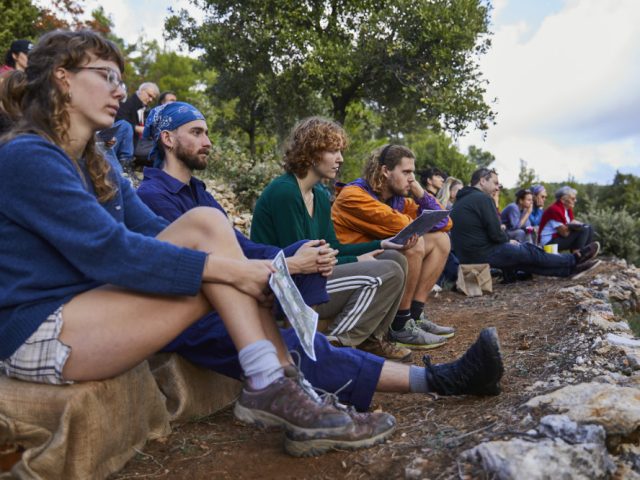
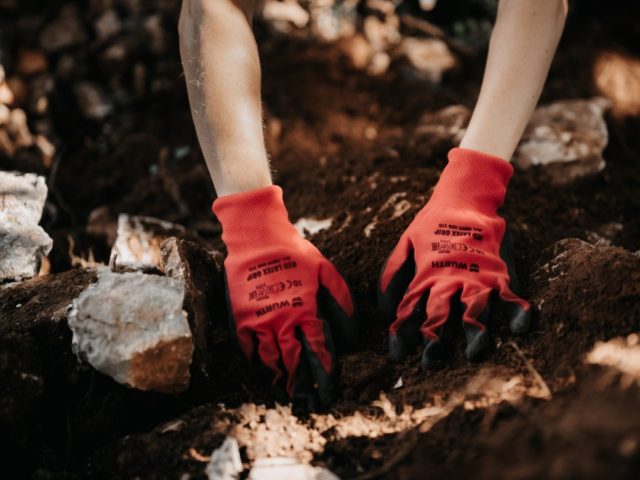
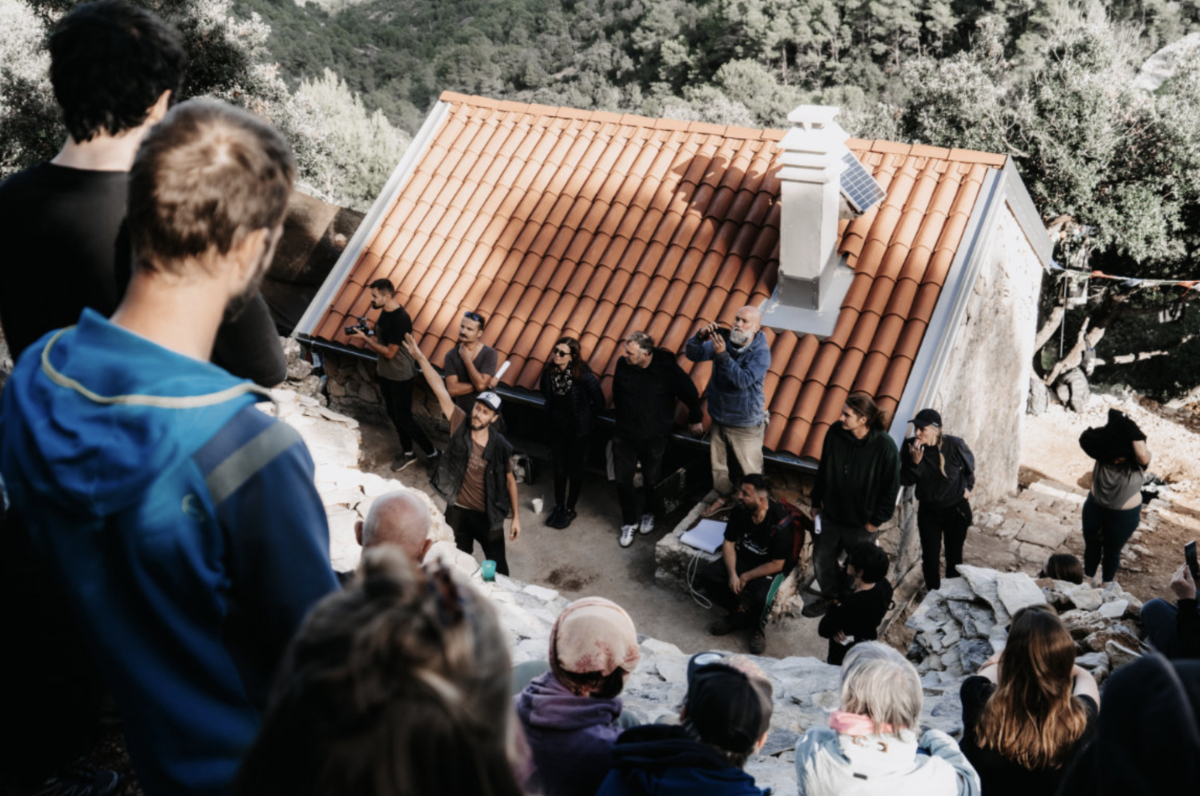
Things have changed quite a bit since Illich first arrived on Brač in 1926, although some things have not. Encounters on these southern Dalmatian islands have been transformative for us all, in different ways. A number of us converged on the island of Vis in the autumn of 2024, coming from different paths but moved by a strange appetite for working together and living otherwise. At the time, some were familiar with Illich’s work and his essay Silence is a Commons. “To live together” was an invitation to a work-action, a proposition that drew over 200 people wanting to learn and practice alternative ways of learning, practicing and infrastructuring together. Over a week, we rebuilt drystone terraces, set up fog collectors, assembled a DIY radio station, shared meals, conversations, silence, and began to understand the idea of pomalo. What was clear is that conviviality is not something that resides within a tool or technology, but emerges in meshes of old and new tools and techniques, materials and environments, and networks that close metabolic loops between the people and the earth.
No one had set out to think about Illich’s centennial (1926-2026) at that point, and we were barely aware he had a relationship to the Adriatic islands. Yet, surrounded by his home sea, somewhat unknowingly, we experiences a bit of joyful sobriety and appreciation for the watery “historicity of stuff” (1985) that Illich espoused. On the boat back, we began reflecting on these island spaces Illich knew and carried, and began the seeds of exploration. How do islands, both literal and conceptual, offer alternative ways of thinking and living together? Islands of Conviviality began there, on a boat on the water, as an invitation to navigate this idea, together.
2025: A Reading Circle
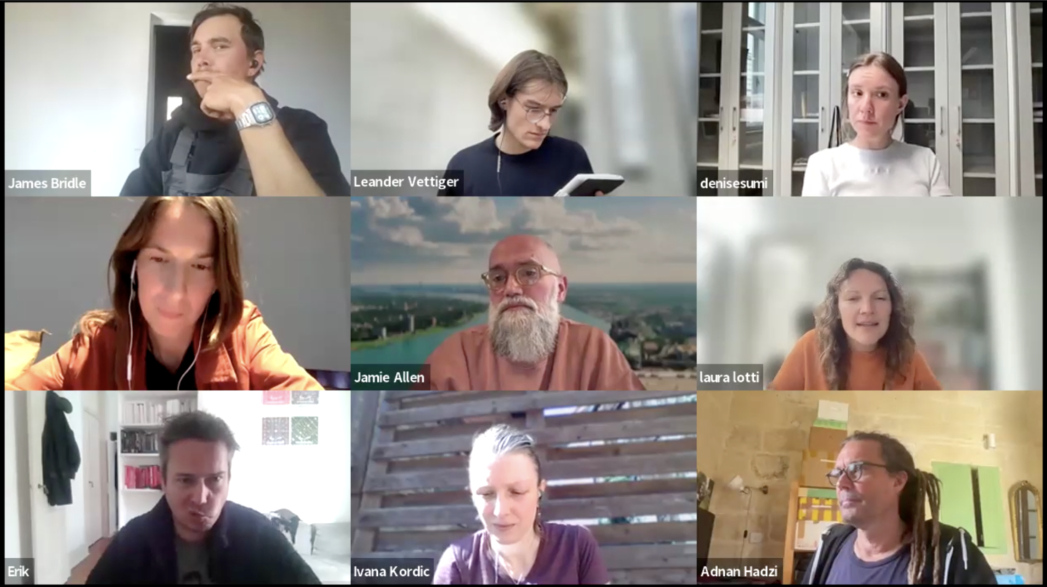
Through 2025, we met monthly with a conversation and reading group, hosted by Šumski Forest University and other in(ter)dependent researchers and practitioners to think further about Illich. Our sessions traced different currents, weaving Illich’s thought with contemporary perspectives on autonomy, technology, ecology, and alternative economies. We aimed to open up space and time for collective thinking and mutual learning, in line with Illich’s own work, and perhaps in interest to gather again in 2026, in some appropriate manner.
Drawing on Illich’s Tools for Conviviality, we explored how tools can extend human capacity rather than replace it, enabling a convivial society of “individual freedom realised in personal interdependence” (1973). By tracing lines from Illich’s Energy and Equity (1973) to contemporary degrowth and the history of scarcity, the idea that energy supplies beyond a certain watershed work against equity became clear. Contemporary ideas, like Giorgios Kallis’s around degrowth, helped framed economic contraction not as loss but as a social metabolism of sufficiency (2014). Jonsson and Wennerlind’s book Scarcity (2023) added literary and historical arguments, outlining how specific institutional arrangements of desire and distribution, not natural limits, define what is “scarce”. These frameworks repositioned ecological justice not as a technofix, but as metabolic—fundamentally reordering of how societies exchange energy, materials, and care.
We also explored Illich’s focus on water in readings of “H2O and the Waters of Forgetfulness (1986), a wide ranging essay on the historical shift of water as a living element and cultural imagination, to a technical commodity and infrastructure. Astrida Neimanis’s Thinking with Water (2013) as accompaniment also brought in an “aqueous imaginary” that is embodied and inspiring. And of course, throughout, themes of convivial education, communal skill, and knowledge sharing brought us to imagine what a “deschooled society” might be like in practice. Land-based pedagogies like the Forest Curriculum (Guha and Toto 2020) and Dechinta Bush University (Ballantyne 2014) brought in as examples of knowledge wrought in reciprocal relationships with territory, memory and ancestry.
These collective reading sessions lay conceptual and critical coordinates to develop Islands of Conviviality as an encounter around September 4, 2026—Ivan Illich’s 100th birthday.
2026: Enoughness
Art Meets Radcial Openness (AMRO), a festival dedicated to art, hacktivism, and radical openness in Linz, Austria, offered up an opportunity to test what we had learnt in this period of study. Illich’s conspiratorial art of “austere playfulness” (1998) became a technique for AMRO’s theme of “becoming unreadable” and “de-platforming ourselves.”
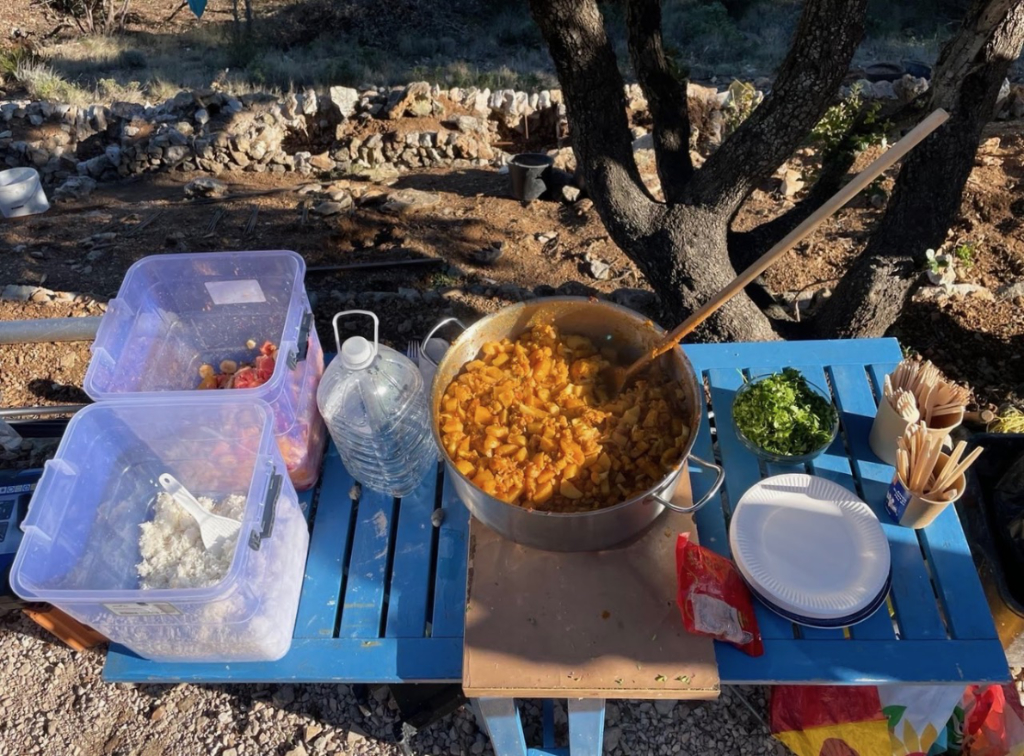
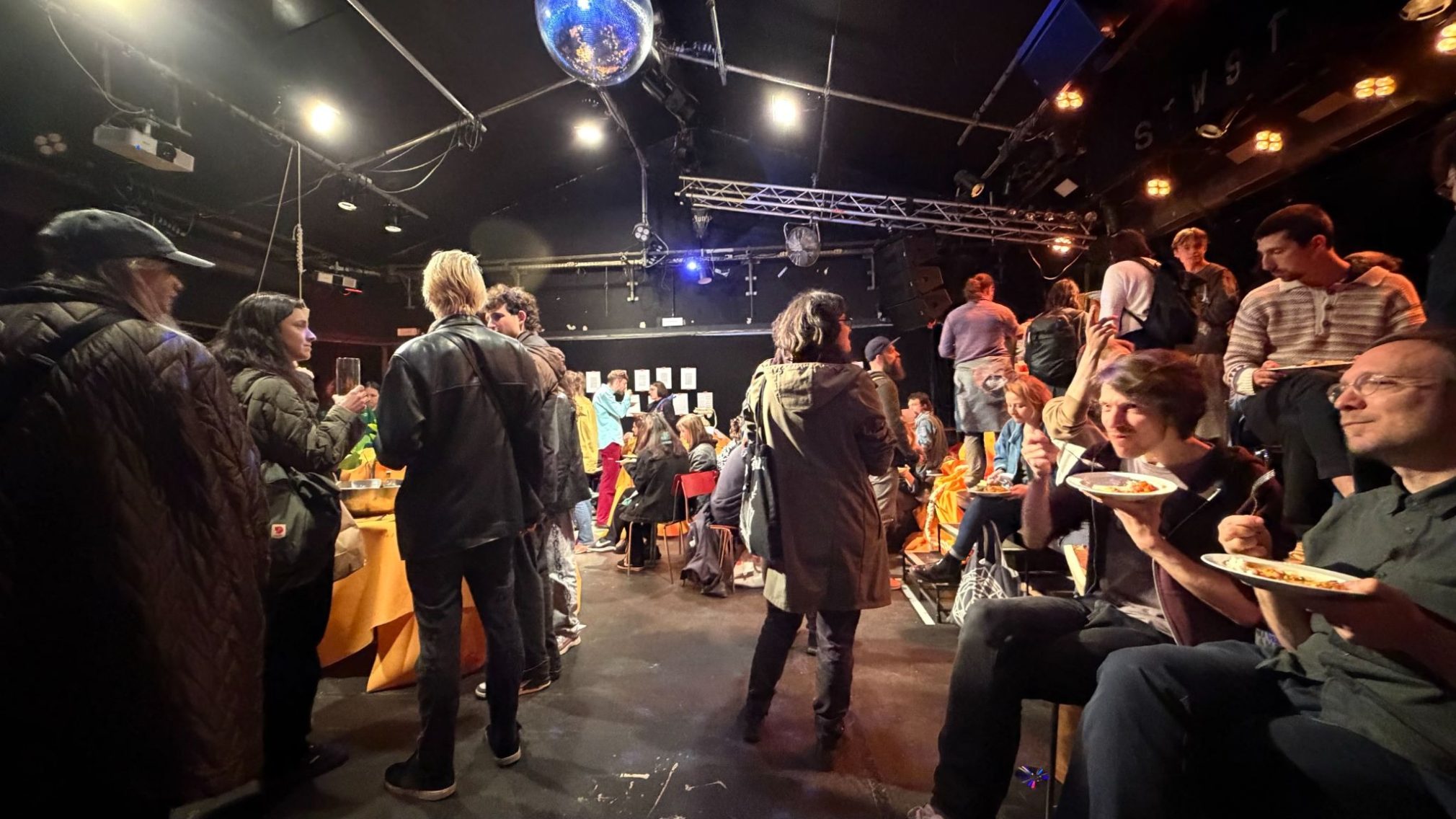
Instead of a talk or workshop on themes of ‘conviviality’ and ‘autonomy,’ we opted instead to cook. Our convivial evening, themed around “Enoughness, or abundance within constraints,” asked what it really means to live and eat well, within limits. Structured as an archipelago of tables at the historic Stadtwerkstatt autonomous space in Linz, various food islands, know-hows and questions were posed. Drawing from Illich, post-war and austerity “wolf-at-the-door” cooking (M.F.K. Fisher and others), seasonal sources provided by local community farms around Linz, minimal tools, and shared labor.
KlimaOase’s Christoph Wiesmayr seeded appetites with a walk that followed Linz’s ‘climate axis’ route through fragments of green space, riverbanks, and infrastructural landscapes, pausing along the way to read and reflect on what the terrain offers. Gmias contributed fresh organic ingredients; Klaus Pfennigberger and the Leisenhofgärtnerei crew were generous with plants and herbs; the AMRO cooking team coordinated on site and lent their kitchen (thank you, Taro and Jan); and students from the Space & Design Strategies programme at the Kunstuniversität Linz, brought in by Andrea Curtoni, worked with us on the dinner’s choreography. Moritz Böttjer, Sophie Morelli, Katharina Steinbüchler, Charlotte Vetter, Gaia Tovaglia, Leonardo Cattaneo, and Pete Hindle shaped its atmosphere, materials, and convivial weirdness of the whole thing. The AMRO festivals own “size of the pot” ethos (which is said to sets the limit of the size of the overall festival) resonated with how keeping within bounds is a kind of metabolic intelligence.
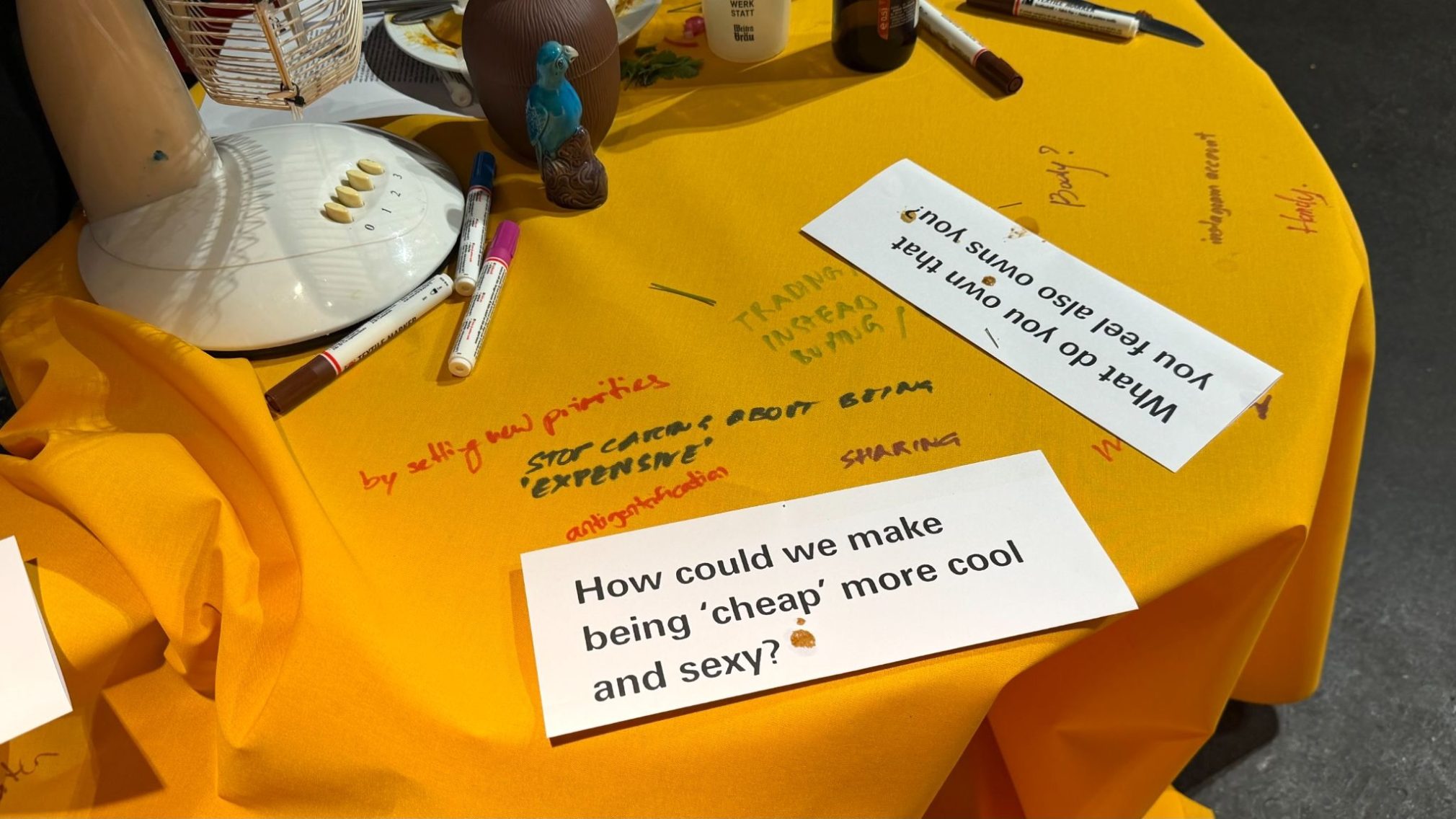
We asked: What technology would you want on a deserted island? What should never be private property? What do you own that you feel also owns you? What could you forage besides food? Which knowledge should be localised, and which should be distributed? How do we repair conflicts? How do you let things die? Both food for the body and food for thought and conversation.
2026: Islands of Conviviality
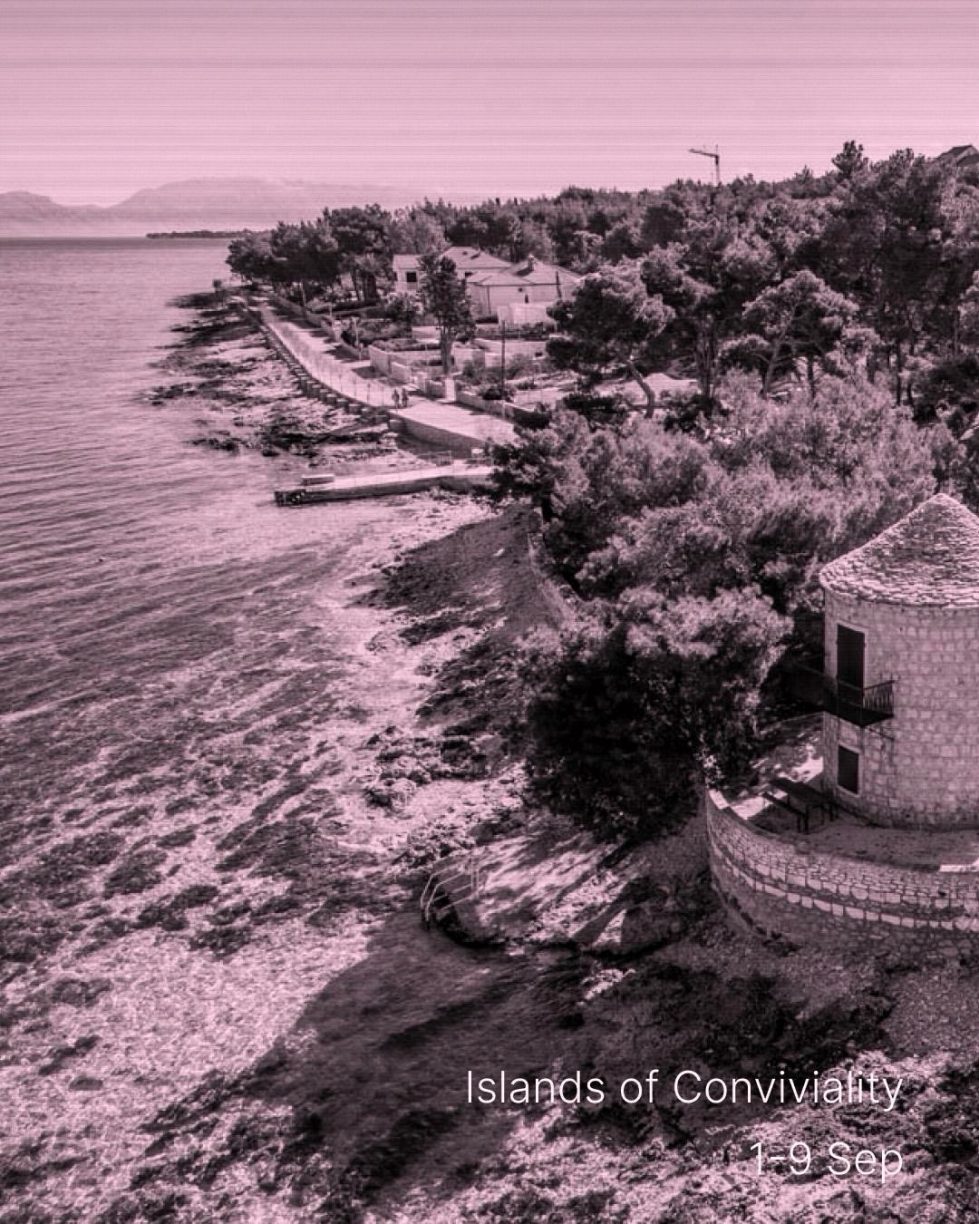
In September 2026, a small research procession departs from Split and moves through the southern Dalmatian islands of Brač, Hvar, and Vis. Islands of Conviviality is an event, and also a method: a nine-day research journey marking the centenary of Ivan Illich’s birth, held in and between the places that shaped his life and thinking.
Taking Illich’s themes seriously, the event is sized deliberately, a way to experiment with constraints, and abundance within them. The boats hold only so many people; the islands themselves set the terms. The programme’s slow, research-processional spirit unfolds across four scales of participation – public, open-but-limited, by-invitation, and on-water – holding the tension between openness and care, welcoming and not overwhelming. An event, like a good meal, should be as big as the pot, as the AMRO festival taught us.
Each island carries its own Illichian thread: on Brač, land practices and herbal knowledge; on Hvar, questions of heritage, rest, and learning otherwise; on Vis, at ISSA, the infrastructure of convivial autonomy through solar hosting, intermittent internet, and convivial tools against a world of enclosed and enclosing platforms. The sea between them is itself a site of research and experimentation. The Sea Symposium hosts readings on deck, listening sessions, and water movements.
2080: A Sea of Islands
The year is 2080. The platforms have fallen. Not all at once, but the way a tide goes out, leaving the server farms dark and the undersea cables cold, and a still quiet. Some of what went is mourned; most of it is not. The sea has come up, these islands always promising it would. Coastlines have been redrawn around them, and the maps are being learned again by sailing between them.
Everything is archipelagic. Not a single “Spaceship Earth” with a single crew and single stewardship, but what the Tongan writer Epeli Hau’ofa once called “a sea of islands”. A vast and connected world, each of us living more or less within what its sky and soil allows, and within neighbourly earshot. They speak, once more, with more or less equally powerful voices. People keep cisterns and live within the rain they get. They size a harvest, a gathering, a settlement by an island arithmetic: as big as the pot. There is a place set at the table. There always was. Nobody thinks its utopia. There are struggles and toil, dramas and disagreements. But the way we talk to one another is different, seems to have been thought about a little more, has a little more integrity. It’s less inter-faced. In talking to each other, also, we feel a particular abundance that only limits make.
For more than a century we tried our best not to be islands. We sought out an automated, workless, frictionless, networked world that joined everything to everything, and rooted it in nothing. Now, we are islands again, bounded and distinct, each a world to be respected and admired, communicated and shared with. Boats move between with seeds and tools and songs and people and knowhow, a slow pomalo traffic across a sea that connects as much as it divides. Nothing is the centre. Each world is whole and, yet, needs, admires, respects and provides something to all the other worlds.
⸻
We are not there yet, of course. It is 2026, the platforms have not fallen, but if you look at them at all its apparent they have begun to rot. Islands are real, the sea is real, and the practice of living well within boundaries is older than any empire that ever tried to consume and kareen past such boundaries. This September, a hundred years after a one-month-old boy named Ivan was carried to Brač on the boat that also brought the island its first loudspeaker, we set out ourselves—between and to the islands of Brač, Hvar and Vis, to read the landscape and its boundaries together. Islands of Conviviality is a rehearsal run at the only scale that has ever held: small, slow, bounded, ferried, and shared.
REFERENCES
Brand, S. (Ed.). (1968–1972). Whole Earth Catalog. Portola Institute.
Brand, S. (Ed.). (1974–1985). CoEvolution Quarterly. POINT.
Cayley, D. (1992). Ivan Illich in conversation. House of Anansi Press.
Chen, C., MacLeod, J., & Neimanis, A. (Eds.). (2013). Thinking with water. McGill-Queen’s University Press.
DeLoughrey, E. M. (2013). The myth of isolates: Ecosystem ecologies in the nuclear Pacific. Cultural Geographies, 20(2), 167–184. https://doi.org/10.1177/1474474012463664
Doctorow, C. (2022, November 28). Pluralistic: Tiktok’s enshittification [Online post]. Pluralistic. https://pluralistic.net/2023/01/21/potemkin-ai/
Ehrlich, P. R. (1968). The population bomb. Ballantine Books.
Farbstein, R., Radić, D., Brajković, D., & Miracle, P. T. (2012). First Epigravettian ceramic figurines from Europe (Vela Spila, Croatia). PLOS ONE, 7(7), e41437. https://doi.org/10.1371/journal.pone.0041437
Felsenstein, L. (1974). The Tom Swift terminal, or, a convivial cybernetic device. LGC Engineering.
Fisher, M. F. K. (1942). How to cook a wolf. Duell, Sloan and Pearce.
Freeland Ballantyne, E. (2014). Dechinta Bush University: Mobilizing a knowledge economy of reciprocity, resurgence and decolonization. Decolonization: Indigeneity, Education & Society, 3(3), 67–85.
Fuller, R. B. (1969). Operating manual for Spaceship Earth. Southern Illinois University Press.
Guha, P., Toto, A., & Engchuan, R. N. (n.d.). The Forest Curriculum [Itinerant platform for indisciplinary research and co-learning on the naturecultures of Zomia]. https://www.forestcurriculum.org
Hau’ofa, E. (1993). Our sea of islands. In E. Waddell, V. Naidu, & E. Hau’ofa (Eds.), A new Oceania: Rediscovering our sea of islands (pp. 2–16). University of the South Pacific. (Reprinted in The Contemporary Pacific, 6(1), 1994, 148–161.)
Illich, I. (1971). Deschooling society. Harper & Row.
Illich, I. (1973). Tools for conviviality. Harper & Row.
Illich, I. (1974). Energy and equity. Harper & Row. (Original work published in French, 1973.)
Illich, I. (1983). Silence is a commons. CoEvolution Quarterly, 40, 5–9. (Address to the Asahi Symposium, Tokyo, 1982.)
Illich, I. (1985). H₂O and the waters of forgetfulness. Dallas Institute of Humanities and Culture.
Illich, I. (1998). The cultivation of conspiracy [Address on receiving the Culture and Peace Prize of the City of Bremen, Villa Ichon, 14 March 1998].
Jonsson, F. A., & Wennerlind, C. (2023). Scarcity: A history from the origins of capitalism to the climate crisis. Harvard University Press.
Kallis, G., Demaria, F., & D’Alisa, G. (Eds.). (2015). Degrowth: A vocabulary for a new era. Routledge.
MacArthur, R. H., & Wilson, E. O. (1967). The theory of island biogeography. Princeton University Press.
More, T. (1516). Utopia.
Odum, H. T., & Odum, E. P. (1955). Trophic structure and productivity of a windward coral reef community on Eniwetok Atoll. Ecological Monographs, 25(3), 291–320. https://doi.org/10.2307/1943285